Saturday, 24 November 2012

Hayao Miyazaki


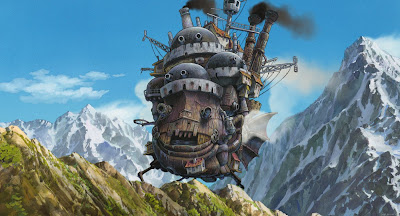
Japanese film director, animator, manga artist and screenwriter Hayao Miyazaki was born in Tokyo on January 5, 1941.  He began his career in animation when he joined Toei Animation in 1961, then going on to work as an 'in-between artist' where he began his journey to directing his first feature film - Lupin III: The Castle of Cagliostro and not long after - Nausicaa of the Valley of the Wind

With the success of his first ventures, Miyazaki went on to co-found Studio Ghibli (Ghibli coming from the Arabic word for Meditiranian Wind, with the idea that the studio would "blow a new wind through the Japanese anime industry") where the majority of the films were those by Hayao Miyazaki and Isao Takahata.




Thursday, 22 November 2012

Nick Gentry


Nick Gentry, born the 29th of May 1980, is a British artist from London who studied at the Central Saint Martins College of Arts and Design. 

His biography states: Much of his artistic output has been generated with the use of contributed artefacts and materials. He states that through this process "contributor, artist and viewer come closer together". His art is influenced by the development of consumerism, technology, identity and cyberculture in society, with a distinctive focus on obsolete media.

He is best known for his floppy disk paintings and film negative artworks, placing an emphasis on recycling obsolete media and the reuse of personal objects as a central theme. Such artistic works of social commentary have been featured in galleries in the UK, USA and in cities throughout the world. His work has been exhibited alongside established street artists and as such has been linked to the urban art scene in London.

"LostMoments"
Created using vintage film negatives, xrays and oil on acrylic sheets.

"The Unidentified #2"
Mixed paint on used computer disks and VHS tape.


Kandinsky

Vasily Kandinsky

Born in Moscow, 4th December 1866
Died December 13th 1944

Studied Law and Economics at the University of Moscow from 1866 to 1892 and then later went on to study art in 1900 at the Munich Academy of Arts, after failing to gain entry the year before.
Kandinsky was credited with painting the first ever purely abstract works, his fascination with colour started at a young age, and this fascination with colour symbolism and psychology continued as he grew.  His studies of Moscow region's folk art, particularly the use of bright colour on dark background, was reflected in his earlier works.  A few years later he first likened painting to composing  music in the manner for which he would become noted - "Colour is the keyboard, the eyes are the harmonies, the soul is the piano with many strings. The artist is the hand that plays, touching one key or another, to cause vibrations in the soul". Colours are used to express Kandinsky's experience of subject matter, not to describe objective nature.
He was also spiritually influenced by H. P. Blavatsky and 'theosophy' - the idea that creation is a geometrical progression, beginning with a single point. The creative aspect of the form is expressed by a descending series of circles, triangles and squares.

"Kochel - Waterfall II"
His forms evolved from fluid and organic,

"Fixed Points"
to geometric, and finally 

"Tempered Elan"
to pictographic.